A Box, a Sign, a Small Leap of Faith: Britain’s Garden Gate Economies
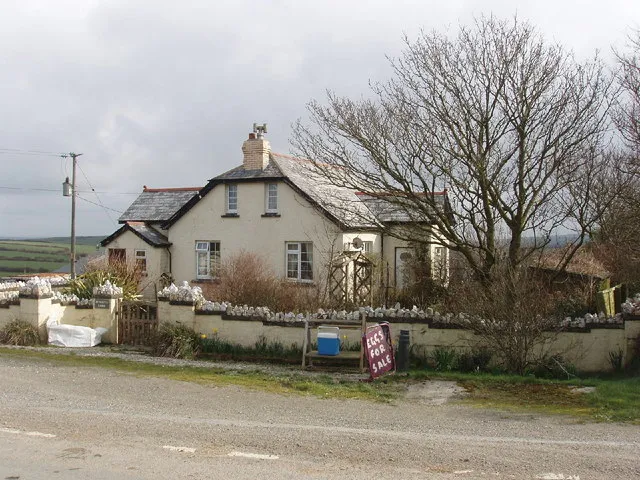
Photo: David Hawgood, CC BY-SA 2.0, via Wikimedia Commons
There is a particular kind of British landmark that never makes it onto the brown signs. It is a small table at the end of a farm track, a cool box by a gatepost, a wooden crate under a bit of tarpaulin. On it: a few dozen eggs, some jars of jam, maybe a bunch of sweet peas in a margarine tub of water. Beside it: a tin, a handwritten notice, and an unwritten rule that the whole thing works only if everybody behaves.
I have stopped at more of these stalls than I can sensibly account for. Sometimes I have bought eggs I did not strictly need. Sometimes I have bought jam because the label was charmingly wonky. Once I bought a bag of potatoes from a stall that consisted of a chair, a box and a sign saying 'Spuds. £1.50. Please don’t let the dog out.' I have never met the person behind any of them, and yet I have come away feeling that I have had a small, pleasant conversation.
The tin that isn’t quite a till
The honesty box is a modest piece of design. Usually it is a tin — an old biscuit tin, a cash box, a repurposed sweet tin with a slot cut into the lid. Sometimes it is a plastic tub weighted down with a stone. Occasionally it is a proper little wooden cabinet with a padlock and a sign explaining that the padlock is broken but the honour system is not.
What strikes me is how often the tin is more weatherproof than the goods. Eggs sit under a plastic dome. Jam jars wear a little cloth bonnet against the rain. The money tin is tucked into a bigger tin, which sits inside a crate, which has a brick on top. There is a whole architecture of trust here, improvised from whatever was in the shed.
The signage is its own genre. 'Eggs £2.50 a dozen. Please put money in tin. Thank you.' 'Jam £3.50. Honesty box. Sorry, no change.' 'Flowers — pay what you think.' Then the addenda, usually in different pen: 'Back at 4', 'Only one bunch per person please', 'Yes, the blue ones are eggs too'. The handwriting is rarely tidy. It does not need to be. It is a note from a neighbour, not a brand strategy.
Exact change and the etiquette of the nearly right
There is an etiquette to these stalls, and it is mostly learned by doing. You try to have the right change. You do not take the last jar if someone else is clearly coming back for it. You do not rummage through the tin looking for a fifty-pence piece like a fox in a bin. You put the lid back on properly. You close the gate.
The tricky moment is when you have only a twenty-pound note and the eggs are £2.50. Some stalls leave a little float. Some do not. Some signs say 'I.O.U. welcome' and mean it. Others say 'Please don’t leave IOUs — this is not a bank' and also mean it. I have seen a jar labelled 'Change for the Honesty Box' sitting beside the main tin, like a tiny central bank for the parish. I have also seen a note that said, simply, 'If you’re short, take the eggs and sort it next time.' That note had been there long enough to go soft at the corners, which suggests next time came around often enough.
What I like is that the system is not naive. It knows people forget. It knows someone will occasionally take a jar and leave no money. The stall adapts. It puts the good jam at the back. It asks for exact change. It keeps going anyway. That is not naivety; it is a working relationship with human nature.
Weatherproofing trust
A roadside stall is also a small lesson in local weather. The eggs are sheltered from the sun. The jam is stacked low so it does not tumble. The sign is laminated, or in a plastic wallet, or written on a piece of wood that has already survived several winters. The tin has a stone on it. The stone has a smaller stone on it.
I have a soft spot for the stalls that have clearly evolved over time. First there was a chair. Then a table. Then a little roof. Then a sign with a proper price list and a small drawing of a hen. Then a second sign apologising for the first sign, which was out of date. It is vernacular architecture, built one practical decision at a time.
And because these stalls sit at the edge of a garden or a farmyard, they tell you something about the place without meaning to. A stall selling duck eggs and rhubarb says one thing. A stall selling plant cuttings and second-hand paperbacks says another. A stall with a cooler box of homemade ice lollies in July feels almost recklessly optimistic. The goods are the message: this is what we have too much of, and we would rather you had it than see it wasted.
A quiet kind of local economy
It would be easy to romanticise all this. Honesty boxes are not a solution to rural economies, and they are not all charming. Some are scruffy. Some are overpriced. Some have obviously been abandoned, with a sign that says 'Eggs' and a tin that contains only rainwater and regret. But the ones that work do something quietly useful. They turn a garden glut into a bit of cash. They give a passer-by a reason to stop. They make the lane feel less like a route and more like a place where people live.
They also ask something of you. Not much — a few coins, a bit of care — but enough to make you notice that you are participating in something rather than just consuming it. You are not tapping a card. You are not being watched by a camera. You are putting money in a tin because you said you would. That is a small thing, but small things repeated across a country add up.
How to be a good customer
If you find yourself at one of these stalls, the rules are simple enough. Carry a bit of cash, and try to carry the right sort. Take what you need and leave what you don’t. Put the money in the tin, not on top of it. Close the lid. If there is a notebook for messages, use it sparingly. If there is a dog, do not let it out.
And if you are short of change, do not panic. Read the sign. Somebody has probably thought of it. The whole enterprise is built on the idea that most people are decent most of the time, and that the rest can usually be sorted out with a note and a bit of goodwill.
I bought eggs from a stall last week. The sign said '£2.50 a dozen. Exact change appreciated. Thank you.' I had £2.50 exactly, which felt like a minor victory. I put the coins in the tin, took my eggs, and closed the gate behind me. Nobody saw me do it. That, I think, is the point.