A Seat, a Plaque, a Whole Life: How to Read Britain's Memorial Benches
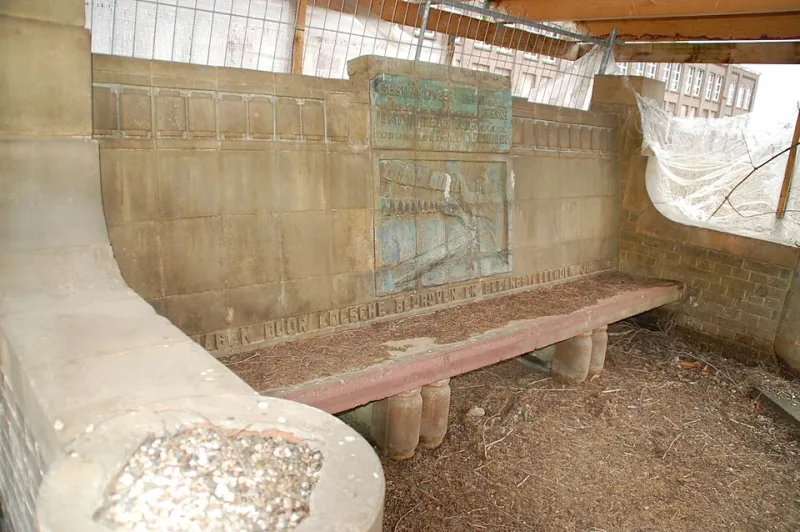
Photo: P.J.L Laurens, CC BY 3.0, via Wikimedia Commons
There is a bench on a headland in Pembrokeshire that I have now sat on four times, and I still do not know the person it belongs to. The plaque reads: Alan. 1938–2014. He loved this view, and he loved this bench, in that order. I have never met Alan. I have, however, thought about him more than I have thought about most people I have actually met.
That is the peculiar power of the memorial bench. We walk past them constantly — on clifftops, beside canals, at the edge of recreation grounds, facing nothing more dramatic than a car park — and yet each one is a small act of publication. Somebody chose a spot, chose a sentence, and left it there for strangers to read.
This is not a solemn piece. Memorial benches are among the friendliest objects in the British landscape, and they reward a bit of gentle attention. Here is how I've learned to look at them.
The anatomy of a plaque
Most plaques are remarkably consistent: a name, two dates, a line or two of text. Brass, usually. Sometimes a small engraved line drawing of something — a dog, a fishing rod, a pint glass, a bicycle.
What strikes me is how rarely the inscription is actually about grief. It is almost always about affection, and usually about something slightly ridiculous. I have photographed (with care, and never posting the names) lines like "He never caught anything here and never stopped trying" and "She sat here every day for eleven years and complained about the wind for eleven years."
There is a whole literary genre on these things, and it is written by amateurs, in fewer than twenty words, to a deadline of forever.
A rough taxonomy of benches
After a few years of noticing, patterns start to appear. Nothing scientific — more a set of gentle archetypes.
The Practical Bench
Placed where it is needed rather than where it is pretty: outside the surgery, at the top of a steep path, beside the bus shelter. Often donated by a WI, a bowling club or a family who got tired of watching elderly relatives stand. The plaque is functional and slightly apologetic: Provided by the Parish Council, 1998. These benches do the most work and get the least credit. I am very fond of them.
The Romantic Bench
The view bench. Positioned with an almost theatrical sense of framing — a curve of bay, a valley, a church spire. The inscription usually mentions the view explicitly, as if the deceased had personally commissioned the landscape. These are the benches people photograph, and rightly so.
The Joke Bench
Rarer, and all the better for it. A plaque that acknowledges its own absurdity: "Reserved for Betty, who never sat down in her life." Or the bench with two plaques, one from each side of a divorce. These are the ones that make you laugh out loud on an otherwise quiet walk, and then feel slightly guilty about it, and then suspect that laughing was the point.
The Crowd Bench
Given by a whole club, and listing twelve names in a font that had to shrink to fit. You can usually tell how well a group got on by whether the names are alphabetical or in order of seniority.
Why that particular view
Last spring I got talking to a woman in her seventies on a bench above a reservoir in the Peak District. She was there, she said, because her husband had proposed to her on that spot in 1969 and had spent the next fifty years maintaining that the reservoir had got smaller.
She was not there to be sad, she explained. She was there because it was a nice place to eat a sandwich and because "it's the only bench where I know exactly what he'd say about the weather."
That, I think, is the real logic of siting. Memorial benches are rarely placed at the most beautiful point available. They are placed at the point that was used — where somebody ate their lunch, walked the dog, waited for a lift, watched the tide come in. The view is doing the work of a photograph, but better, because you can sit in it.
Bench etiquette, for the hesitant
A short and entirely unofficial guide, assembled from observation and a couple of mild telling-offs.
Do sit. A bench with nobody on it is not a shrine. It is furniture, and it was bought for you. Sitting on it is the compliment.
Don't photograph the full plaque with names and share it. Read it, remember the good line, leave the names alone. A plaque is technically public, but it belongs to a family.
Don't tidy it. That small cairn of pebbles, that seashell, that slightly sad bunch of supermarket flowers in a jam jar — leave them. They are not litter and they are not yours.
Don't add to it. No coins, no ribbons, no notes. Leave somebody else's memorial unedited.
Do move on if a family arrives, or if someone is clearly there for a reason. Sit, take your five minutes, give it back.
The most useful kind of monument
Britain is not short of memorials. We have statues of men on horses, obelisks to long-forgotten committees, plaques to things that happened in buildings that are now phone shops. Most of them function only as decoration.
A bench is different. It does its job every single day, for anyone, regardless of whether they know whose name is on it. It has an actual function: a place to rest a bag, catch your breath, get out of the drizzle for a minute. Alan's bench, whoever Alan was, has given me four good sits and one excellent think about mortality, and I have never once had to buy a ticket.
That is a decent legacy, honestly. Better than most.
A last note on the smaller ones
If you start noticing benches, you will also start noticing the things that aren't benches: a single engraved plank on a stile, a tree with a small hoop of metal, a stone set into a wall with a name and a year. Somebody once told me she stopped reading them because they made her sad.
I understand that. But I've found the opposite. Read enough plaques and you stop seeing death and start seeing preferences — the man who liked fishing, the woman who complained about the wind, the couple who argued about the size of a reservoir for fifty years.
A bench is a person, reduced to their favourite view and one good sentence. It is not a bad way to be remembered. It is certainly not a bad way to spend an afternoon.