Where the Brook Loses Its Name: A Tiny Waterway Walk
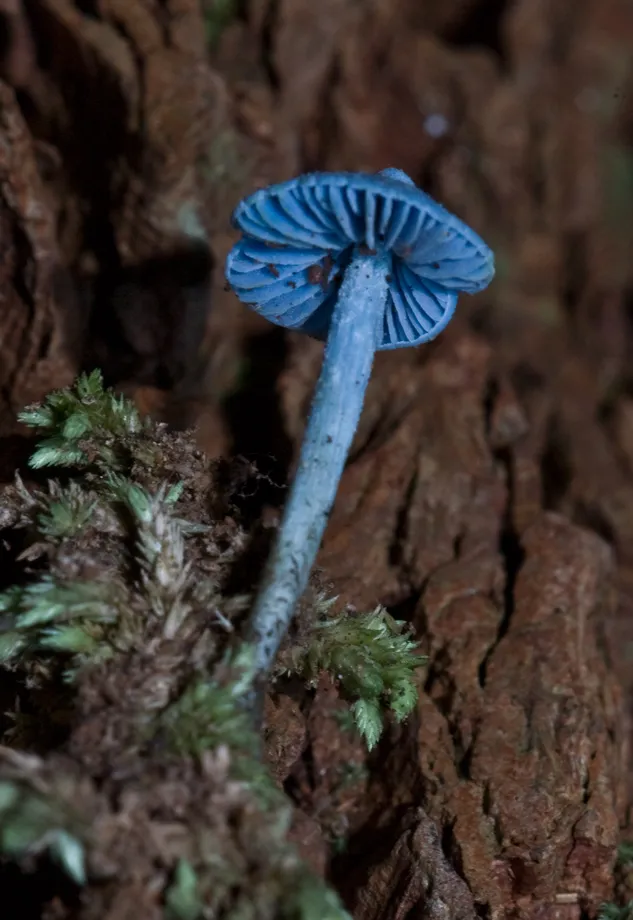
Photo: Ian Dodd (kk)], CC BY-SA 3.0, via Wikimedia Commons
Begin with a blue line and a stubborn idea
A gill is not a grand statement. It is a fold in the land with water in it, usually doing its best under a canopy of moss and dead leaves. The same goes for a beck, a brook, a syke or a burn. These are the UK's smallest waterways, and most of us cross them without noticing. The idea here is simple: choose one on the map, find where it starts, and follow it until it forgets its own name at the confluence.
This is not a route to bag or a challenge to complete. It is a slow travel exercise in scale. A stream that takes twenty minutes to walk beside can occupy a whole morning if you let it.
Choose a waterway that suits your legs
Open an OS Explorer map or the OS Maps app and look for a thin blue line with a name attached. Something like Cow Gill, Hemp Brook, Sike Beck or Nannycatch Brook. The name matters less than the shape: a short run from a hillside source to a larger river is ideal. You want a beginning, a middle and an ending you can reach on foot.
North of England place names often use gill for a ravine or stream in a steep-sided valley. Beck is common across Yorkshire and Cumbria. Brook turns up everywhere, while syke and burn hint at wet ground and northern or Scottish influence. Reading the names is half the fun. A stream called Foul Syke is telling you something about the ground. One called Silver Beck is probably overselling it.
Check access before you set off. Use public footpaths, open access land and permissive paths. Do not assume a stream bank is walkable just because it looks inviting. In England and Wales, the definitive map and local authority rights-of-way records are your friend. In Scotland, the access code is broader, but good sense still applies.
Pack for damp, not drama
You do not need expedition kit for a morning beside a brook. You do need boots with grip, a waterproof layer, water, a charged phone with offline maps and a paper map if you have one. Tell someone where you are going. Check the weather and river levels; small streams can rise fast after rain, and a pretty cascade can become a slippery trap.
Take care around steep gill sides, loose stone and cattle. Keep dogs under control near livestock and wildlife. Leave gates as you find them. If a path is boggy, accept the bog. If a landowner has made access clear, respect it. The point is to be a quiet guest, not a explorer with a capital E.
Read the banks like a local historian
As you walk, look for the small human clues. A stone footbridge no wider than a wheelbarrow. A culvert under a lane. A line of worked stone where a mill once sat. Place names such as Mill Lane, Ford Road, Brig End and Wath are all little annotations on the water's history. A stream that seems anonymous today may have powered a corn mill, drained a field or marked a parish boundary.
Look, too, for the natural details. Dippers bobbing on stones. A heron pretending it has not seen you. Watercress, moss, liverwort, the occasional kingfisher if you are very lucky and very still. In autumn, leaves collect in dams behind branches. In winter, the water runs clear and cold. In summer, it may almost vanish, which is its own lesson about how much we rely on these small flows.
Stop where the name runs out
Follow your chosen stream until it meets a larger river. There is no ceremony at the confluence. The smaller water simply arrives, joins the bigger one and stops being itself on the map. Sit for a few minutes. Notice how the colour changes, how the sound changes, how the larger river barely acknowledges the newcomer.
Then walk back by a different path if you can. The return leg gives you a second view and a chance to spot what you missed. You will probably pass a tea room, a village hall or a bench with a view. Sit down. You have followed a gill from source to surrender. It is a small thing, but small things are worth the attention.