A Slightly Lopsided Glow: Notes from the Christmas Lights Switch-On
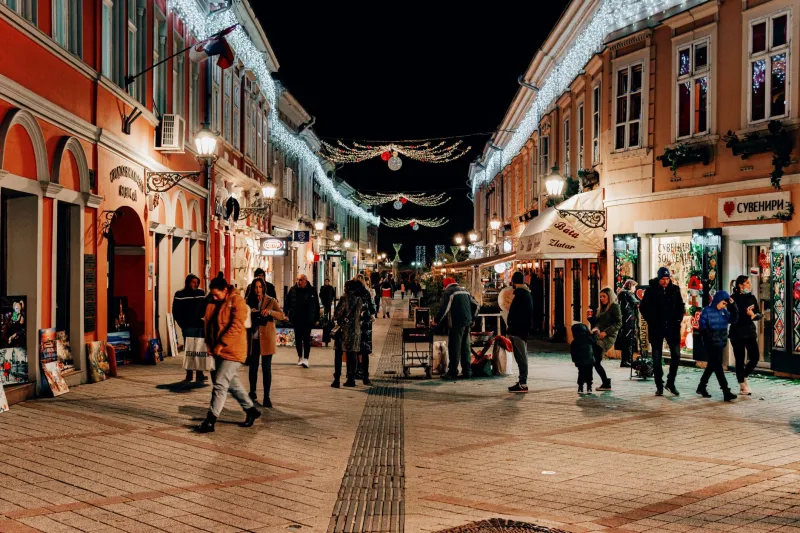
The high street is at its most theatrical at 4.45pm on the first Saturday of December. The sky is already doing its dim, drizzly thing. The tree is up, leaning a degree or two to the left, and the crowd has begun to assemble in that British way — not quite a mob, not quite a queue, everyone standing just far enough back to avoid being asked to help.
By the time the 2026 switch-on comes around, the ritual will feel both brand new and exactly the same as it always does. That is the point. A small-town lights switch-on is not really about lighting. It is about turning up.
The Committee and the Clipboard
There is always a clipboard. Sometimes there are two. The person holding it is usually wearing a hi-vis jacket over a sensible coat, and they know things the rest of us do not: where the extension leads go, which plug socket is safe to use, and why the cherry picker was booked for 3pm but arrived at 3.40.
The clipboard is not a prop. It is a script. On it are timings, risk assessments, and a list of names that reads like a parish rota — choir, cubs, brass band, town crier, someone to hold the door of the church hall. Nobody is paid. Almost everybody has done it before. The whole event runs on the quiet arithmetic of volunteer persistence: one person rings the council, another borrows the generator, a third makes a flask for the person on the ladder.
This is civic theatre, and the set is scaffolding. The lighting rig is a cherry picker. The stage manager is a retired teacher with a laminated sheet and a look that says we are not doing the countdown until the choir is in position.
The Choir, the Cub Pack, and the Acoustic Reality
The school choir sings first. They are arranged in two rows, the taller ones at the back, and they perform with the earnestness of people who have been rehearsing since October. The microphone feeds back during the first verse. The headteacher mimes the words from the side. A cub scout in the front row is visibly more interested in the switch itself than in "Little Donkey".
None of it is polished. That is not a complaint. A recorded choir on a shopping centre sound system would be smoother, but it would also be a broadcast rather than a gathering. The wobble in the sopranos is the sound of actual people standing in the cold because they said they would.
The brass band follows, and by then the crowd has thickened. People have brought flasks. Someone is selling mince pies from a trestle table in aid of the church roof. The local rotary club has a tombola. There is a general sense that we are all here for the same reason, even if nobody can quite put it into a sentence.
The Countdown
At some point, the clipboard person steps forward and asks for quiet. This is optimistic. The crowd settles into a loose hush, the kind that lasts about four seconds. Then the countdown begins — usually from ten, sometimes from five, depending on how cold everyone is.
Ten. Nine. The choir joins in. Eight. Seven. A toddler in a bobble hat shouts six a beat too late. Five. Four. Three. The person at the switch is grinning and slightly nervous. Two. One.
The switch is thrown. Most of the lights come on.
There is a cheer, then a pause, then a laugh. One strand remains dark — usually the one above the charity shop, or the one wrapped around the second lamppost, or the one that has failed every year since anyone can remember. The committee looks at it. The committee looks at the clipboard. Someone says, we'll look at it Monday. Everyone knows they will, and everyone knows it will probably do the same thing next year.
The Strand That Never Works
That dark strand has become part of the display. It is the gap in the smile, the missing button on the coat. You could see it as a failure, but the crowd does not. The crowd sees a small, specific, entirely human thing: a group of volunteers who have managed to make most of the high street glow, and who have not pretended otherwise.
The British genius for making do is often described as a kind of cheerful resignation. I think it is more active than that. It is the decision to celebrate what has been achieved rather than wait for perfection, to say this is enough, and enough is worth doing. The faulty strand is not an embarrassment. It is an invitation to look closer. It tells you that the lights were put up by people, not by a corporation. It tells you that the event is held together by borrowed ladders and goodwill and the willingness to try again next year.
What the Glow Is For
After the countdown, the crowd drifts towards the church hall. There is tea, squash, and a plate of biscuits that has been arranged with real care. The choir eats crisps. The cubs run about. The clipboard person finally puts the clipboard down and has a cup of tea, and someone tells them it looked lovely, and they say well, apart from the one strand, and everyone laughs.
The lights stay on until January. They are not spectacular. They do not synchronise to music or change colour every thirty seconds. They just make the walk home a bit less dark. And that, really, is the whole thing: a rehearsal for the year ahead. Show up. Do your bit. Accept the gap. Go for tea.
By the time the 2026 switch-on is over, someone will already be making a note about the faulty strand for next year. The clipboard will come out again. The choir will rehearse. The cherry picker will arrive late. And the high street will glow — slightly lopsided, entirely itself.