Pinned in Place: A Slow Reader's Guide to the Village Hall Noticeboard
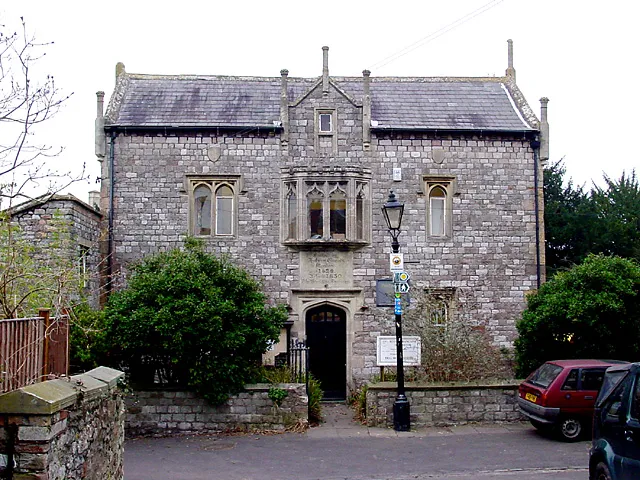
Photo: Linda Bailey, CC BY-SA 2.0, via Wikimedia Commons
Every place keeps two versions of itself. One is official: the parish website with its slightly outdated photo of the duck pond, the heritage plaque, the sign at the edge of the village announcing it was Best Kept Village in 1998 and has been dining out on it ever since. The other version lives behind glass, in a frame that has needed a new lock since about 2011, and it is infinitely more honest.
I mean the village hall noticeboard. Or the one in the Co-op porch, or under the awning at the garden centre, or stapled to the telegraph pole outside the church. Slow travel, as I've come to understand it, isn't really about walking further or going slower. It's about giving a place enough of your time that it stops performing for you. Ten minutes in front of a noticeboard will tell you more about a village than a whole afternoon in its museum.
The anatomy of the thing
There's a grammar to these boards. A top layer, usually behind glass, reserved for things with letterheads: parish council agendas, a bus timetable that has been photocopied so many times the times are now grey suggestions, a notice about the defibrillator. Then the middle layer, where the living happens. Then the bottom edge, ragged with tear-off tabs, which is where the board quietly admits it's a marketplace.
If you want to understand a place quickly, read from the bottom up. The tabs tell you what people need. A card offering 'hedge cutting, no job too small, ask for Dave' with four tabs left means Dave is either very good or very busy. A card with all eight tabs still attached means Dave has just started, or Dave has a reputation, and you should ask around before hiring him.
A rough taxonomy
The lost cat. Photocopied to the point of abstraction, so the animal is now a grey smudge with eyes. The text will be in Comic Sans and will include the phrase 'much loved family pet' and a landline number. It will still be pinned up in March for a cat that went missing in October. Nobody removes it. It has become part of the furniture, and there's something rather moving about that.
The ukulele circle. Always a cheerful font. Always a Tuesday. Always an open invitation to people who have never held a ukulele and are mildly frightened of the idea. These notices are the single best indicator of a village's health, in my view. A place with a ukulele circle has either a very strong community or a very brave retired teacher, and often both.
The council warning. Laminated. Slightly too much information. Usually concerning dogs, bins, or the correct use of the recreation ground. There is a tone these notices achieve — polite, formal, and absolutely furious — that no other form of British writing quite manages. 'Residents are reminded' is a sentence that has ended friendships.
The coffee morning. Handwritten, with a time that has been altered twice in biro. Proceeds to the church roof, or the air ambulance, or both. There will be a cake stall. There is always a cake stall.
The passive-aggressive parish note. Addressed to nobody in particular and everybody at once. Concerns parking outside the hall during events, or the state of the hedge, or a mystery deposit on the playing field. Signed 'a concerned resident'. Never signed by an unconcerned one.
The children's art club. Bright, hand-drawn, entirely sincere, and the best-designed thing on the board by a country mile.
The one where the tear-offs have been torn badly. Someone has ripped across the phone number rather than cutting along the dotted line. This is not a small thing. This is a personality trait.
Pinning etiquette, which is unwritten but absolute
Nobody will ever explain the rules to you, and yet breaking them will be noticed within a day.
Ask the keyholder first — the board behind glass belongs to the hall committee, and its contents are curated, however chaotically. Never pin over an existing notice; pin beside it, or wait. Use drawing pins in the corners rather than one through the middle, so the thing hangs properly and doesn't ripple. Cut your tear-off tabs with scissors. Date your notice at the bottom, because an undated notice becomes folklore. And when it's over — the concert has happened, the cat has come home, the hedge has been cut — go back and take it down. That last one is the mark of a civilised person.
Why these boards deserve better than 'clutter'
We tend to treat noticeboards as visual noise, something to be tidied away in the name of regeneration. But they are the closest thing most villages have to a live archive. They record what people cared about, week by week, in a form that was never meant to last and therefore doesn't lie. Parish newsletters get written for the record. A noticeboard gets written for Thursday.
Libraries and county archives have started photographing them, which I think is quietly brilliant. If you're passing and you see someone taking a picture of a noticeboard, don't assume they're lost. They might be doing the most useful local history in the county.
How to read one in ten minutes
Stand slightly to one side, because standing square-on in front of a board in a small village reads as either official business or suspicious behaviour. Read the bottom tabs first. Find the oldest thing on the board and work out why nobody has taken it down — there's usually a story there. Count the number of fonts. Anything above five tells you the board is looked after by committee, and committees contain multitudes.
Then walk away and have a cup of tea somewhere, and see whether anyone mentions the cat.