The Mug Shelf Knows First: Inside the Village Hall Kitchen
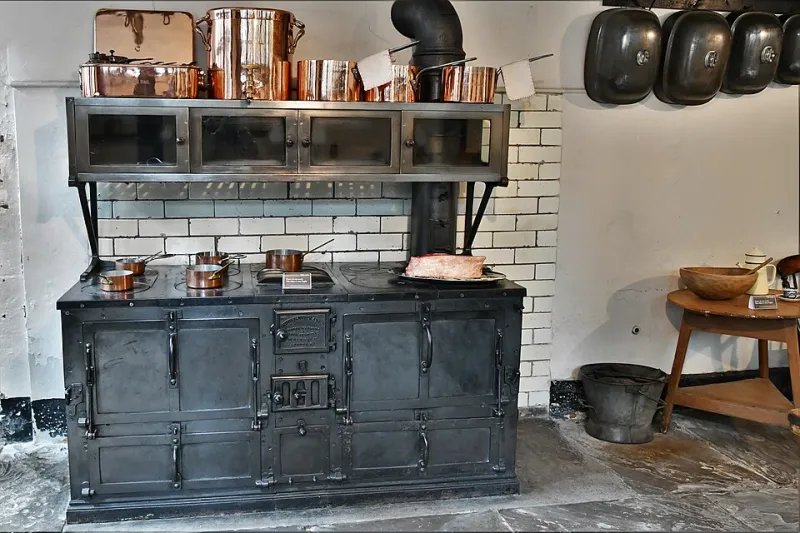
Photo: Michael Garlick , CC BY-SA 2.0, via Wikimedia Commons
On a damp Tuesday in November 2026, I arrived at the village hall forty minutes before the quiz was due to start. The chairs were still stacked. The caretaker was somewhere behind the stage, wrestling with a table. And from the kitchen came the sound that precedes almost every useful thing in rural Britain: the tea urn clearing its throat.
Nobody had put the sign out yet. Nobody had unlocked the little box for the raffle tickets. But the kitchen was already awake, and that told me more about the evening ahead than any printed programme could.
First, Put the Kettle On
The village hall kitchen is rarely beautiful. It is often a narrow room with a serving hatch, a strip light that buzzes, and a sink that has seen things. There may be a fridge with a handwritten label on the door and a freezer containing one ancient bag of peas and several unidentified tubs. The surfaces are wiped but never quite empty. A stack of laminated signs waits by the kettle: Teas 50p, Please rinse your cup, Cake donations welcome.
And yet, this is where the evening actually begins. The urn is filled. The milk is sniffed, cautiously, and judged fit for purpose. Someone remembers the sugar. Someone else remembers that the sugar bowl has no spoon. A small delegation is sent to the cupboard under the stairs, where the good spoon lives, behind the Christmas decorations and a box of hymn books.
By the time the doors open, the kitchen has already performed its quiet miracle. It has turned a cold, echoing hall into somewhere people might linger.
An Archaeology of the Mug Shelf
If you want to read a community, skip the framed certificates in the corridor and look at the mug shelf. It is a civic archive in ceramic form.
There are the sturdy white mugs with the hall’s name printed on them in a font that was probably modern in 1987. There are commemorative mugs from jubilees, coronations and one particularly ambitious silver anniversary. There are mismatched donations from house clearances: a mug from a holiday in Cornwall, a mug shaped like a chicken, a mug with a chip so familiar that everyone knows to avoid it. The chicken mug is always chosen by a child, and always returned to the shelf with a look of mild betrayal.
Nobody throws a mug away. That would be like throwing away a parishioner. Instead, the shelf grows. It becomes a small museum of ordinary generosity, and the fact that nobody quite matching the cups to the saucers is part of the point. The kitchen is not trying to be a hotel. It is trying to be a place where everyone can find a cup.
The Biscuit Rota and Other Small Economies
There is an economy in the village hall kitchen, and it runs on biscuits. Not the expensive kind, usually. Digestives. Rich tea. The occasional fancy shortbread that appears after a funeral and is treated with appropriate solemnity. The biscuit tin is a barometer of the occasion. A quiz night gets supermarket own-brand. A wedding gets the good tin. A parish council meeting gets whatever was left in the cupboard and a whispered apology.
The rota is rarely written down, which is how you know it is serious. Certain people bring biscuits without being asked. Certain people bring too many biscuits and are gently teased. Certain people forget, and are gently reminded. It is a system of small debts and small kindnesses, and it works because everyone understands the unspoken terms.
Tea money is another matter. The honesty box, the jam jar, the little plastic tub with a slot cut in the lid: these are the financial instruments of the village hall. Nobody audits them. Nobody wants to. The point is not the fifty pence. The point is the shared agreement that the urn does not fill itself.
The Washing-Up Treaty
Then comes the washing up, which is where the kitchen reveals its true character.
There are rules. They are not printed. They are absorbed. Pans go on the left. Mugs go in the bowl, not stacked beside it. The tea towel with the least holes is for drying, the other one is for mopping. Someone will always say, Leave that, I’ll do it, and someone else will always say, Don’t be silly, you did the urn. This exchange can go on for several minutes and is a form of social bonding disguised as domestic admin.
In a good kitchen, the washing up is not a chore but a conversation. It is where the real business of the evening gets done: who is unwell, whose grandson has started school, which field is being sold, why the bus timetable has changed again. The official meeting may have finished, but the kitchen is still in session.
In a less happy hall, the washing up is left for one person. You can tell. The sink tells you. The atmosphere tells you. A kitchen is never just a kitchen.
What the Kitchen Knows
The notices in the corridor will tell you about the next coffee morning, the pilates class, the Christmas fair. They are useful. They are necessary. But they are the version of the village that has been agreed upon and typed up.
The kitchen tells you the other version. It tells you who arrives early and who stays late. It tells you whether there are enough volunteers or too few. It tells you whether the hall is loved, or merely maintained. It tells you if there is room for a child to stand on a chair and stir the squash, and whether anyone will mind if the urn is a bit furred inside.
So next time you go to a village hall event, arrive a little early. Follow the sound of the tap. Offer to carry something. Accept the mug you are given, even if it is the chicken. The urn is on, and the kitchen is where the community keeps its pulse.