Waiting Room Wonders: The Quiet Art of the Bus Shelter
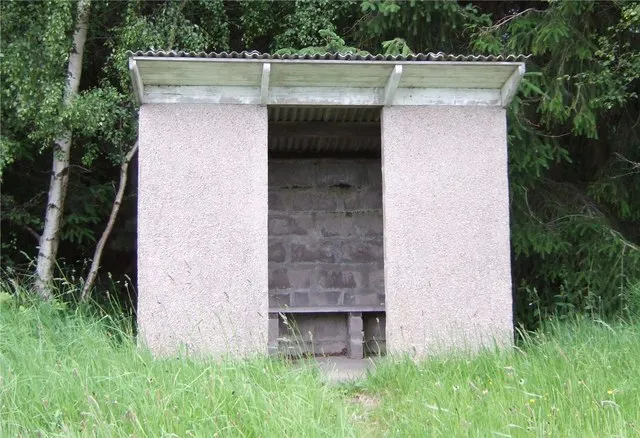
Photo: Stanley Howe, CC BY-SA 2.0, via Wikimedia Commons
There is a bus shelter on the edge of a village I know where the timetable is the least interesting thing about it. The glass is scratched, the bench has a slight lean, and the bin has seen better decades. But behind the plastic frame where the route map should be, someone has pinned a poem about rain. It is typed, laminated, and slightly crooked. It has been there so long that the corners have gone soft with sunlight.
This is not an official art trail. There is no leaflet, no opening night, no curator in a black polo neck. But across the UK, in rural stops and suburban lay-bys, bus shelters have become tiny, unofficial exhibition spaces. A child’s drawing of a cat. A knitted postbox. A handwritten notice thanking the driver. A photograph of the village pond in snow. None of it is meant to be there, exactly. All of it is meant to be seen.
The noticeboard with a roof
Bus shelters occupy a strange place in British public life. They are waiting rooms without walls, porches without houses. They belong to everyone and no one. The council cleans them, the bus company ignores them, and the rest of us use them for the practical business of standing under a roof while pretending not to look at each other.
And then, quietly, someone puts a drawing in one. Then another. Within a month, the shelter has a personality.
I have seen a shelter in a Cotswold village where the theme was local birds — a puffin drawn by a six-year-old, a heron cut from a magazine, a pigeon rendered in glitter glue with more confidence than accuracy. In a Sheffield suburb, the glass was taped with poems about buses, tea and the weather. In a coastal Norfolk stop, someone had knitted a small scene of a lifeboat and attached it to the frame with cable ties. It was not technically brilliant. It was completely charming.
These are not galleries in any formal sense. But they are exhibitions, all the same. They are free, open all hours, and curated by whoever happens to have a laminator and a spare Tuesday.
Lamination as a statement of intent
There is something deeply British about the laminated note. It says: I have thought about this. I have made an effort. I am prepared for the weather.
A laminated poem in a bus shelter is not just a poem. It is a small act of civic decoration. It says that this place — this draughty, graffitied, slightly sad bit of street furniture — is worth a bit of care. The same goes for the handwritten timetable corrections, the little drawings of dogs, the notices about lost gloves. They are all part of the same instinct: to leave a mark that says someone was here, and they thought you might like something to look at.
I once met a woman in her seventies who maintained the shelter outside her house. She had a drawer of spare drawing pins, a roll of sticky-backed plastic and a firm view that the children’s artwork should be changed every half-term. “It gives them a reason to walk down here,” she said. “And it gives the rest of us something to talk about while we’re waiting.” She was not an artist. She was a curator, whether she liked it or not.
A knitted scene, a missing glove
The best bus shelter exhibitions are not themed. They are accretive. They grow by accident. A child’s drawing goes up. A neighbour adds a poem. Someone else pins a photograph of the bus that used to run on Sundays. A knitted robin appears in December. By spring, the shelter has a small, ramshackle history of the place.
This is why you should always look properly. Not just at the obvious things, but at the edges. The notice about a missing glove. The tiny drawing of a house. The faded birthday card that someone has carefully re-taped. These are not clutter. They are evidence of passing time, and of people who have decided that waiting does not have to be empty.
There is a shelter near me where someone has pinned up a series of postcards showing the same view of the street in different decades. No captions, no explanation. Just a reminder that the bus stop has outlasted the bus company, the phone box, and the shop on the corner. It is a history exhibition in a perspex frame.
How to read a shelter properly
If you want to enjoy these tiny galleries, you have to slow down. Stand inside. Look at eye level and then lower. Read the handwritten bits. Notice what has been laminated and what has been taped. A laminated poem is a statement. A drawing held up with Blu Tack is a happy accident. A knitted scene attached with cable ties is a commitment.
Do not treat them as quaint curiosities. They are not there for our amusement, or for a photograph to post online with the caption “only in Britain”. They are there because someone wanted to make a small, public gesture. The least we can do is look at it properly, and perhaps leave it exactly as we found it.
And if you are tempted to add something yourself — a poem, a drawing, a pressed flower — check first. Some shelters have unofficial guardians who are very particular about the arrangement. But many would be delighted. The bus shelter gallery is not a closed shop. It is a very small, very draughty, endlessly welcoming arts venue. The opening hours are whenever the number 47 is late.
The people with the staple gun
What strikes me most about these shelters is not the art. It is the maintenance. Someone has to notice when the drawing goes soggy. Someone has to replace the missing pin. Someone has to decide that the knitted robin has had its day and quietly remove it. These are the people who keep the smallest galleries in Britain going, and they are almost never acknowledged.
They are not looking for credit. They are just doing a small thing that makes the wait a bit better. And in doing so, they remind us that creativity does not need a gallery, a grant or a private view. It needs a bit of glass, a pin, and someone willing to stop for a moment and look.
So next time your bus is late — and it will be — take a proper look around the shelter. There might be a poem. There might be a knitted lifeboat. There might just be a drawing of a cat with six legs and a very confident expression. Either way, you are in a gallery. It is free. It is open. And it is almost certainly better than the timetable.