Too Much PVA, Not Enough Time: Diary of a Carnival Float Rookie
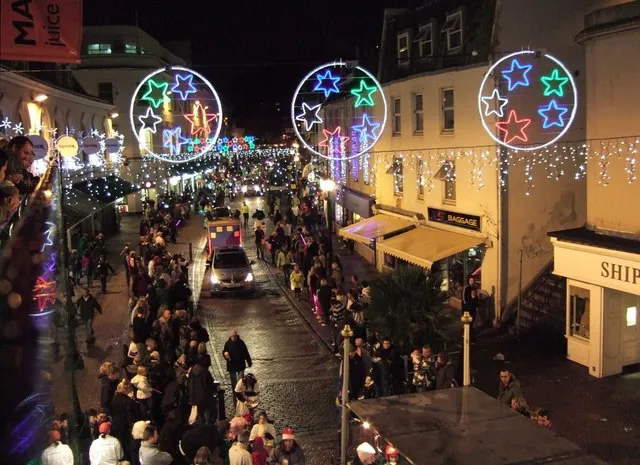
Photo: Derek Harper, CC BY-SA 2.0, via Wikimedia Commons
There is a particular kind of optimism that seizes a person in February. It involves a clipboard in a pub, a sheet of paper headed 'Carnival Committee', and a woman called Jan saying, 'We just need a few more pairs of hands.' I wrote my name down. I did not ask what the theme was. That was my first mistake and, it turned out, the correct way to start.
This is a diary of the six months that followed — building a carnival float in a wet field with a crew of about nine, a budget that would not buy a decent pair of trainers, and a deadline that could not, under any circumstances, be moved. I'm writing it down partly because it was the most creatively useful thing I've done in years, and partly so that I remember, next February, exactly what I'm agreeing to.
March: the theme is announced
The theme, when it arrived by group chat, was 'A Journey Through the Seasons'. Nine people, four seasons. I put forward a quiet suggestion about doing winter only, in the manner of a minimalist, and was politely steamrollered. We would do all four. We would also, somehow, include a swan.
Nobody explained the swan. In community projects, some decisions arrive pre-made, like weather.
My first real job was sketching. I am not a natural sketcher, but cardboard is forgiving in a way paper isn't, because you're not drawing a plan so much as making a promise. Four panels, one per season. Spring at the front, winter at the back, so the float sorted itself out as it drove. Somebody said 'narrative arc' and somebody else said 'we've got a trailer, not a Turner Prize', and both of them were right.
April: cardboard economics
Here is what nobody tells you about float-building: it is 80 per cent materials logistics and 20 per cent making things. We spent a whole Saturday sourcing cardboard from the back of a carpet shop, which was a triumph, and then another Saturday discovering that not all cardboard is equal. The corrugated stuff from the carpet shop was structural. The thin stuff from the supermarket was decorative, in the way that a paper hat is a hat.
We learned the word 'flitch' and used it far too much. We learned that chicken wire is a budget sculptor's best friend and a glove's worst enemy. We learned that pallets are currency.
By the end of April, the scout hut smelled permanently of PVA and there was a low-level argument running about whether the swan should be white paint or white tissue. The tissue camp won. The paint camp have not fully forgiven them, even now.
June: the weather problem
British summer is not a season so much as a series of damp interruptions, and a float is fundamentally a large paper object that must live outdoors. This is a design flaw built into the whole art form.
We waterproofed. Then we waterproofed again. Then we had a lengthy, strangely philosophical conversation about the difference between 'waterproof' and 'water-resistant', conducted in a gazebo while rain came in sideways. Somebody's nan's varnish was deployed. A tarpaulin rota was drawn up. The tarpaulin rota lasted four days before collapsing into a kind of weather-based anarchy where whoever was nearest tied it down.
The lesson, which applies well beyond carnivals: you cannot design out the weather. You can only design something that survives it, and then accept that it will look slightly different by the time it reaches the high street.
July: glitter, and the last Thursday
There is a point in every project where tastefulness leaves the building and you start gluing things to other things because it's nine at night and the judging tent opens on Saturday.
For us it was the second Thursday of July, eleven-fifteen, in the field behind the recreation ground, under two sets of headlights. The swan needed a final pass. Somebody produced a tub of craft glitter of a size normally used on greetings cards. Somebody else said, 'Not the big glitter.' Reader, it was the big glitter.
By midnight the swan looked magnificent and faintly terrifying, and there was glitter in my hair, my car, my kettle, and, inexplicably, the passenger footwell of a stranger called Gareth who had come to help with the trailer and stayed for three hours. That is the whole carnival experience in a sentence, really.
The morning of
The float looked, at 7am, like something a very ambitious primary school had made. By half nine, with the bunting up and the music working and the children in the spring panel wearing cardboard daffodils, it looked like the best thing in the world. Perspective is everything, and so is a bucket of tea.
We placed third. I want to be clear that this was a triumph. We beat the brewery, whose float was professionally built and, in my view, emotionally empty.
What I actually learned
Compromise is a craft skill. Every good thing on that float came out of somebody's idea being quietly improved by somebody else. The swan existed because Jan is stubborn. It looked good because the tissue camp out-argued the paint camp. Neither would have managed it alone.
Community projects run on unglamorous labour. Trestle tables, bin bags, raffle tickets, that one extension lead everyone knows about. Genius is about a fifth of it. The rest is lifts and sandwiches.
Make something people can walk towards. The joy isn't in the finish. It's in a five-year-old in a cardboard leaf costume waving at a stranger's nan on the pavement. That's the product. Everything else is packaging.
And it is worth it, which is the annoying part. Because Jan will be in the pub again in February with a clipboard, and I know exactly what I'll do.