The Worn Way Through: A Walker’s Guide to Britain’s Unmapped Shortcuts
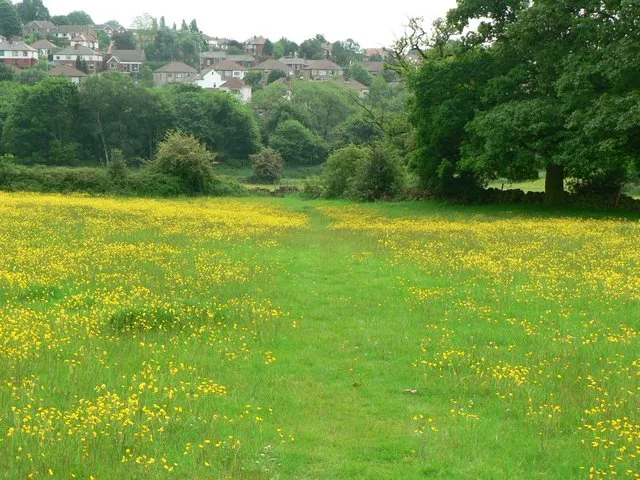
Photo: RichTea, CC BY-SA 2.0, via Wikimedia Commons
The map said no. The hedge said otherwise.
I was standing at the end of a lane in a village I won’t name, because the whole point of these paths is that they are not really advertised. The Ordnance Survey showed a footpath curving politely around a field. The hedge in front of me showed a gap the width of a grown adult, the grass beneath it worn to a pale, flat scar. A dog lead had clearly passed through it. So had a pushchair, a pair of wellies and, judging by the mud, at least one very determined child on a scooter.
This is the other path network. The one that doesn’t appear on the laminated map at the car park. It is made of gaps, not signs. It is maintained by feet, not councils. And it is one of the most quietly useful, quietly contentious things about walking in Britain.
The map is only half the story
Official rights of way are a marvel. They are legally protected, signposted, and fought over by people who know what a stile should look like. But they are also slow. They follow old parish boundaries, farm tracks and hedgerows that made sense when the only traffic was sheep. They do not always account for the fact that the school is now on the other side of the bypass, or that the quickest way to the shop is through a gap that somebody’s grandad opened in 1978 and nobody has ever quite got round to closing.
Unofficial paths are not rebellious, exactly. They are pragmatic. They are the walking equivalent of a desire line: the route people take because it is shorter, drier, safer or simply more pleasant than the one they are supposed to take. You can find them at the edge of every village: a squeeze through a hedge, a flattened bit of wire fence, a strip of grass beside a field that has been walked so often it has forgotten how to stand up straight.
How to read a gap
Not every gap is an invitation. Some are just gaps. The trick is learning to tell the difference.
A used gap usually has a floor. Look down. If the grass is worn, if the mud is churned, if there is a faint path leading away on the other side, you are probably looking at a shortcut. A gap with nettles across the entrance and no disturbance beyond it is more likely to be a fox route or a place where a fence panel fell out in 2019 and was never replaced.
A used gap also has edges. Hedges are not passive. They grow into the space you give them. A gap that people actually use will often have a slightly rounded, polished look on the inside — branches pushed back, twigs snapped, a small accumulation of dog hair at knee height. It is not a formal doorway. It is more like a handshake.
And a used gap usually leads somewhere obvious. A stile, a lane, a field corner, a back gate. If you follow it for twenty yards and end up in a thicket with no exit, you have probably misread the situation. That happens. The hedge is not obliged to make sense.
The etiquette of the unofficial path
Informal paths come with informal rules. They are rarely written down, but they are widely understood.
First, leave it as you found it. If you squeeze through a gap, don’t widen it. If a branch is springy, let it spring back. If there is a plank over a muddy patch, put it back where it was. The path works because it is low-maintenance. It stops working when people start improving it without asking.
Second, don’t advertise it. There is a difference between mentioning a nice walk to a friend and pinning a route to a national walking app. The gap can take a few extra pairs of boots. It cannot take a coach party. The quiet ones stay quiet because nobody makes a thing of them.
Third, give way. These paths are often narrow, and they are shared with dogs, children, wheelbarrows and the occasional confused pheasant. A bit of patience goes a long way. So does a nod. You don’t need a conversation. You just need to acknowledge that you are both using the same small piece of unwritten infrastructure.
Who keeps it open?
The honest answer is: nobody, and everybody.
There is no budget for the gap in the hedge. There is no parish council subcommittee for the flattened fence. But the path stays open because enough people use it, and because the people who own the land usually tolerate it. That tolerance is the whole system. It is a low-level, unspoken agreement: you can cut through, as long as you don’t make a mess, don’t let the dog chase the sheep, and don’t sue anyone if you trip over a root.
Sometimes the maintenance is almost invisible. A farmer trims the hedge and leaves a notch. A householder cuts back a bramble that has started to lean across the entrance. Someone picks up a fallen branch and leans it against the fence. Someone else stamps down a molehill. These are tiny acts, but they are the reason the path is still there.
When someone mends the gap
And then there is the other thing. The argument.
Because every unofficial path has an unofficial opponent. Sometimes it is a landowner who is tired of litter, or a walker who is tired of mud, or a parish clerk who has received a complaint about a fence that is not technically a gate. Sometimes it is simply someone with a roll of stock netting and a strong opinion about trespass.
When a gap is suddenly mended, the village notices. It is discussed in the shop queue, on the village Facebook group, and in the kind of careful sentences that begin “I’m not saying anything, but…” People who have used the path for thirty years are suddenly told they are on private land. People who have never used it develop strong views about public access. The hedge, which has been quietly doing its job for decades, becomes a boundary again.
Sometimes the gap reopens. Sometimes it doesn’t. Sometimes a new gap appears fifty yards along, because walkers are nothing if not adaptable. The map stays the same. The ground adjusts.
A note on walking them well
I am not suggesting you treat every field edge as a public right. You should know where you are, respect closures, and never assume a gap is a right of way just because someone else has worn it. The countryside is a working place, not a theme park.
But there is something worth noticing in these small, unofficial routes. They are evidence of a different kind of map: one made by habit, need and local knowledge. They are the shortcuts that make a village feel like a village rather than a postcode. They are the reason a walk can feel less like a route and more like a conversation with the place.
So next time you see a gap in a hedge, look down. If the grass is worn, if the mud is churned, if there is a faint line leading away, you are probably looking at a path that nobody planned and everybody maintains. Step through carefully. Let the branch spring back. And leave the gap exactly as you found it — open.